Dream Diary — April 2024
Context and intent
Dream Diary was developed for the course Innovative Technology Interaction at Utrecht University. The assignment was to make an everyday object feel enchanted through interaction.
We chose an alarm clock, because waking up is a moment where people are often in between imagination and routine. Our goal was to turn that brief dream state into something tangible, playful, and reflective.
Concept and outcome
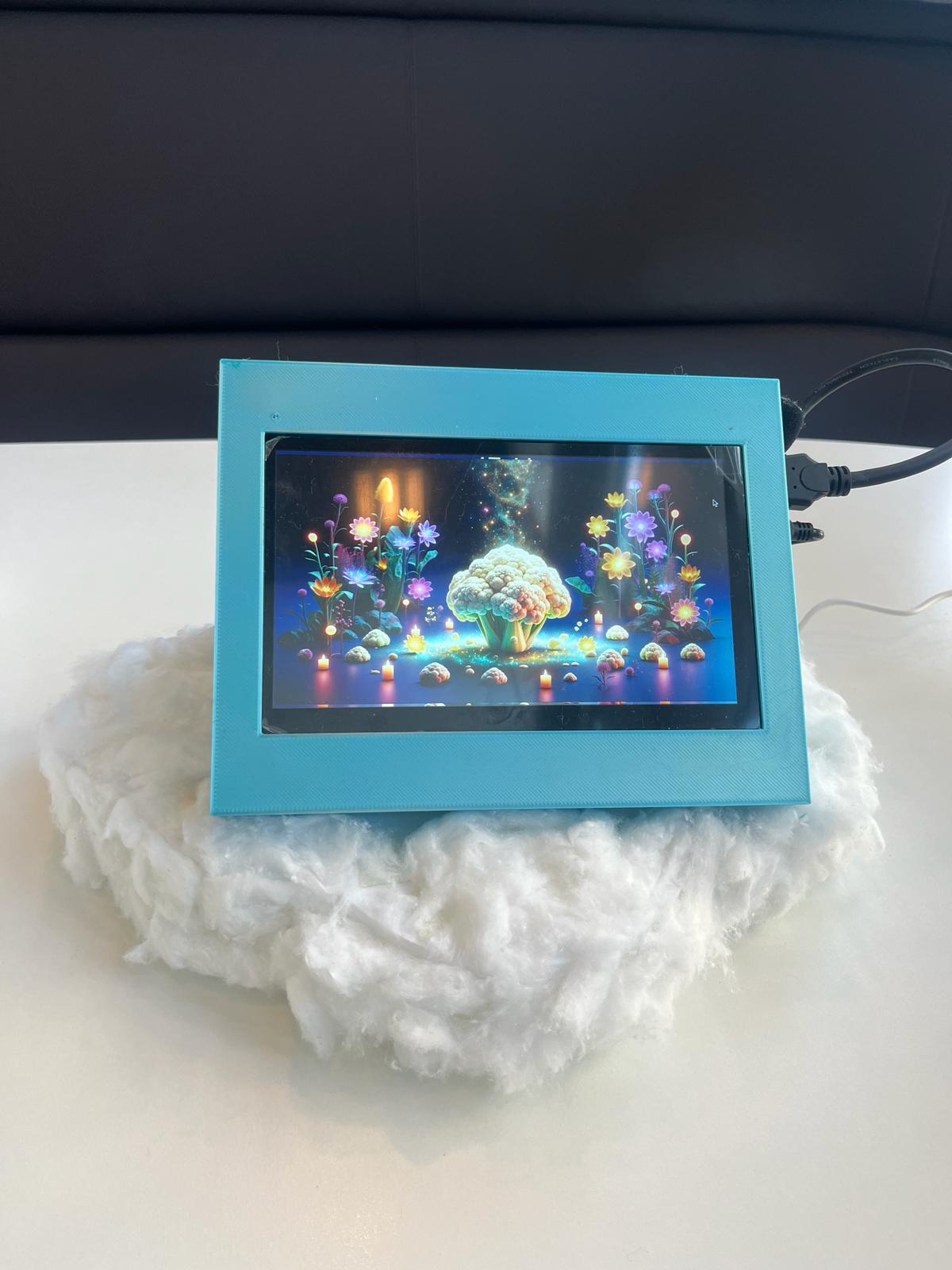
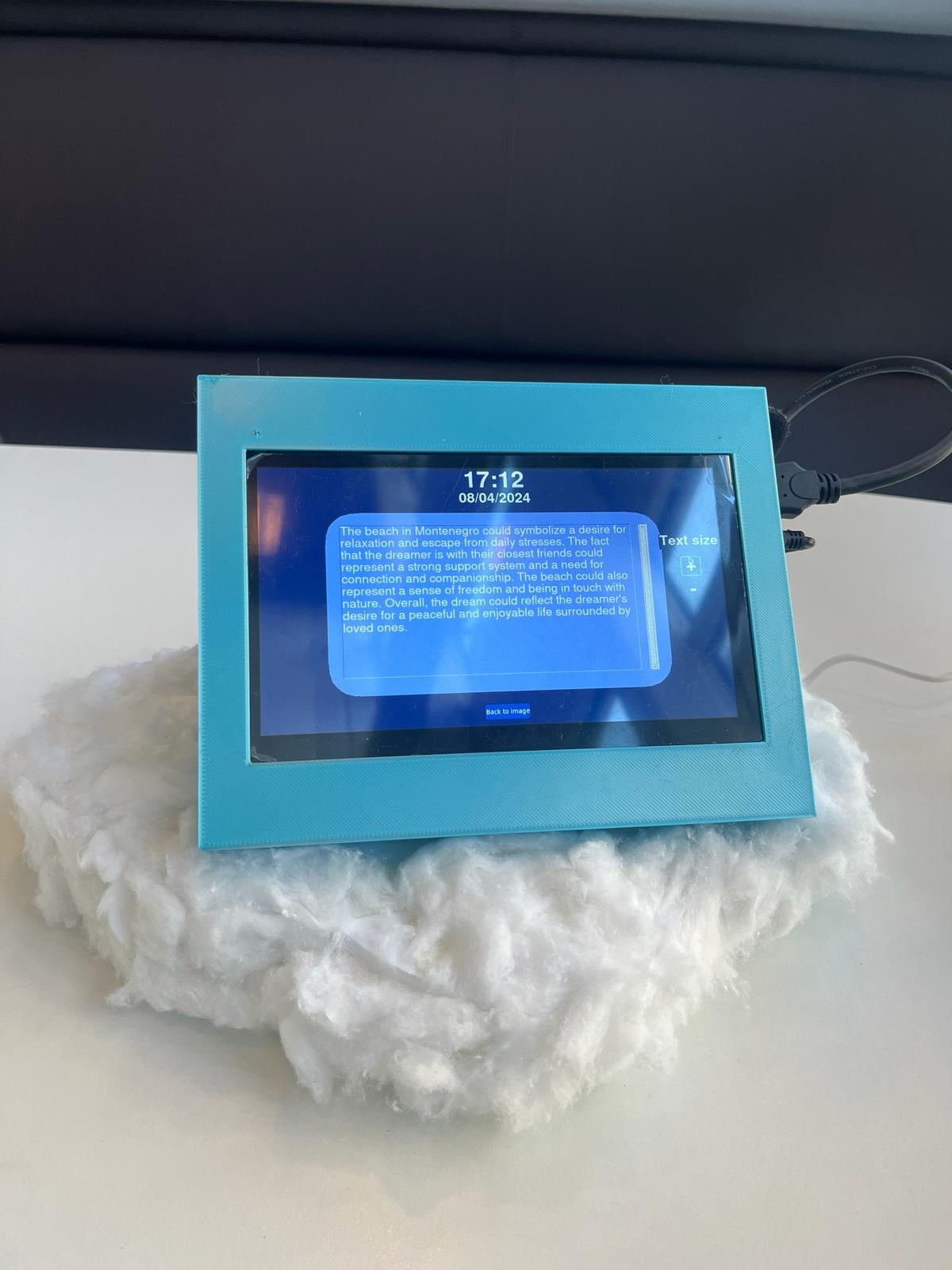
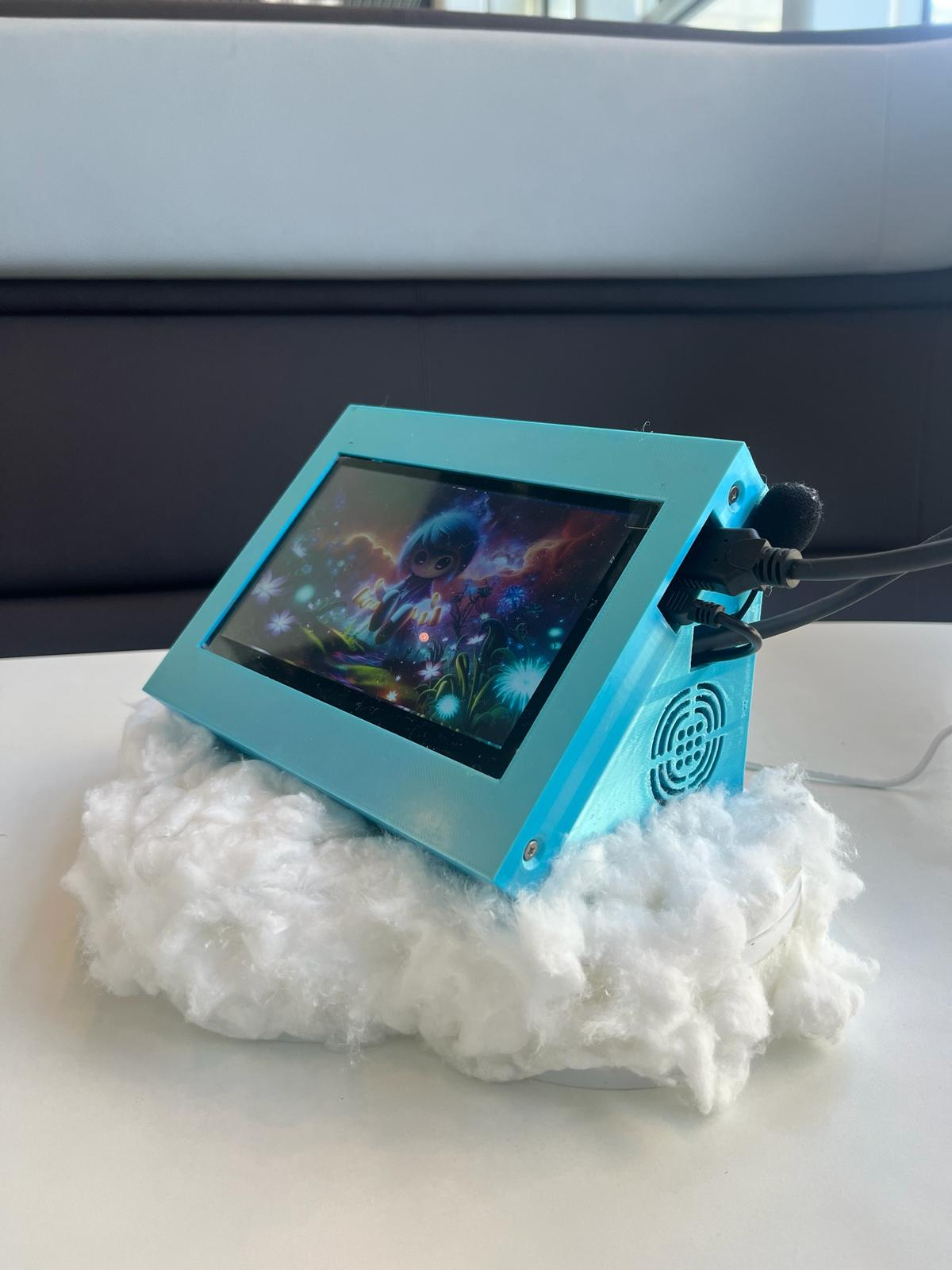
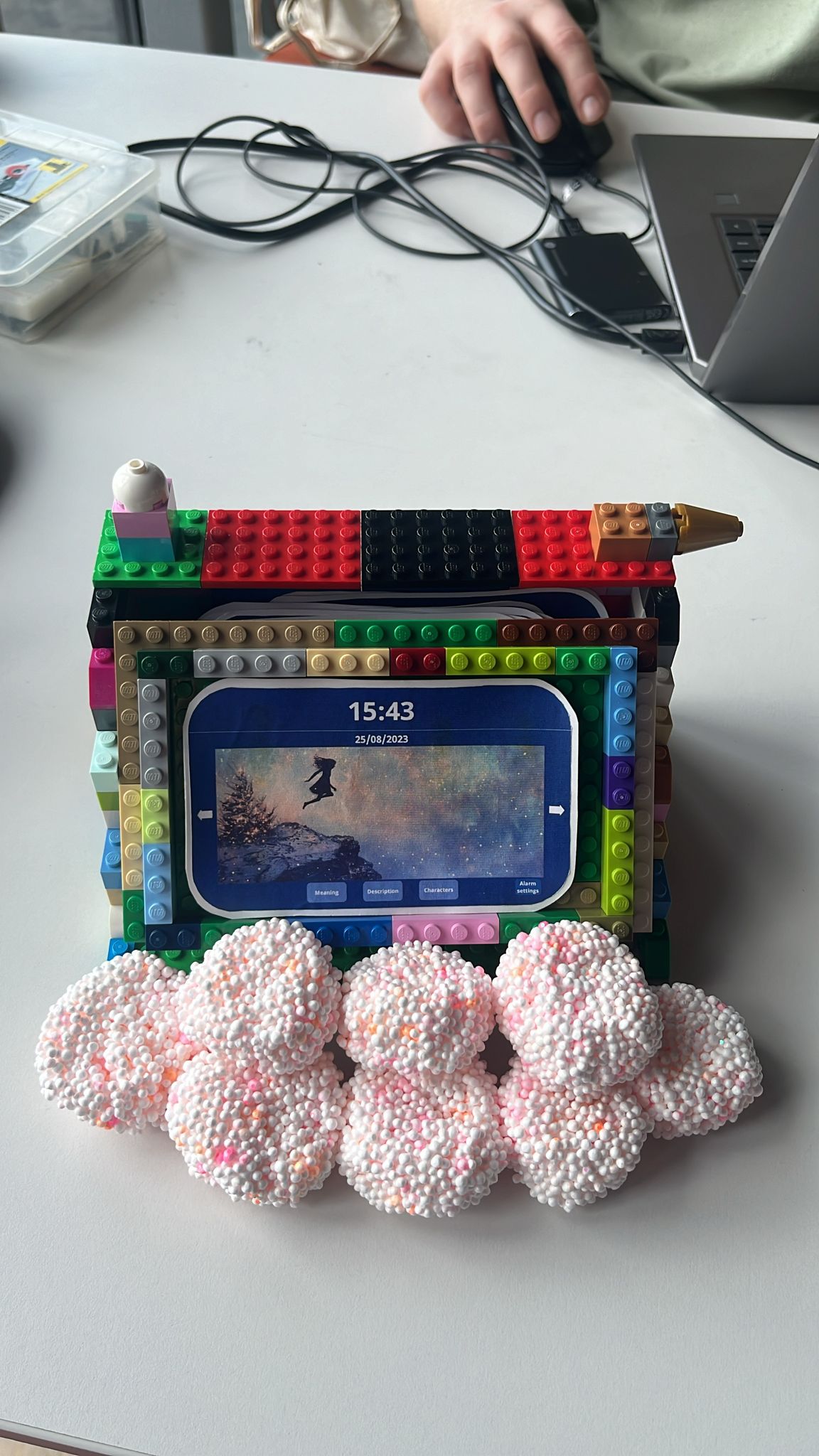
Dream Diary is an interactive alarm clock that invites you to describe your dream out loud after waking up. The system records your voice, transcribes it, detects key characters or themes, and generates a matching image using generative AI.
The result is an alarm clock with a touchscreen that makes the experience feel personal. Besides the image, the system can also suggest possible meanings or interpretations, encouraging reflection rather than just enchanting.
My role
I started as a prototyper, but during the project I also took on the role of programmer and team lead. However, as I was most experienced with Raspberry Pi's and generative AI, I also took over the role of programmer and team lead. I was mainly responsible for the Raspberry Pi setup, the AI integration, and the overall coding structure.
A large part of the work was making the full pipeline reliable: from recording audio, to transcription, to prompting, to generating a coherent output. I also helped keep the concept grounded by constantly checking whether each feature actually supported the “enchanted object” experience.
Reflection and learning
This project taught me a lot about ownership in teamwork. When one team member struggled to contribute, I stepped in and took over the responsibility of leading the project to a proper finish. That was new for me, as I usually would've not intervened. This project pushed me to be more direct and assertive towards team members who are performing.
It was also my first time building with a Raspberry Pi in a full prototype context. Compared to earlier projects, using an API based image model made iteration much faster. In an earlier project I had to create a complete stable diffusion server to generate AI images, now it was possible in less than a minute. The tradeoff was less control over the output, but for this project that limit was acceptable.
Project snapshot
Created by Sanne Duinker, Willemijn Barens, Laura Koekkoek, Toine Ruinard and Roland Wit